New Excavations at Çatalhöyük Reveal Early Mural Art
Recent archaeological work at Çatalhöyük, a Neolithic settlement in central Anatolia, has brought to light a series of mural paintings that had remained hidden for thousands of years. These discoveries, made during the 2023 excavation season, provide tangible evidence of the symbolic and artistic practices of early farming communities. The murals, rendered in mineral pigments on plastered walls, depict geometric patterns, human figures, and animal motifs that suggest a complex visual culture.
The site of Çatalhöyük has long been recognised for its dense agglomeration of mud-brick houses, roof-level entryways, and elaborate burial customs. However, the newly found paintings add a new dimension to the understanding of how these Neolithic people expressed themselves. Unlike portable art objects, wall paintings are fixed in space and often associated with specific architectural contexts, offering clues about the social and ritual use of domestic areas.
In this article, we examine the nature of the newly discovered murals, the methods used to study them, and the broader implications for interpreting the symbolic world of early farmers. The findings are presented within the framework of ongoing research at Çatalhöyük, which involves a multidisciplinary team of archaeologists, conservators, and archaeological scientists.
Context and Discovery of the Murals
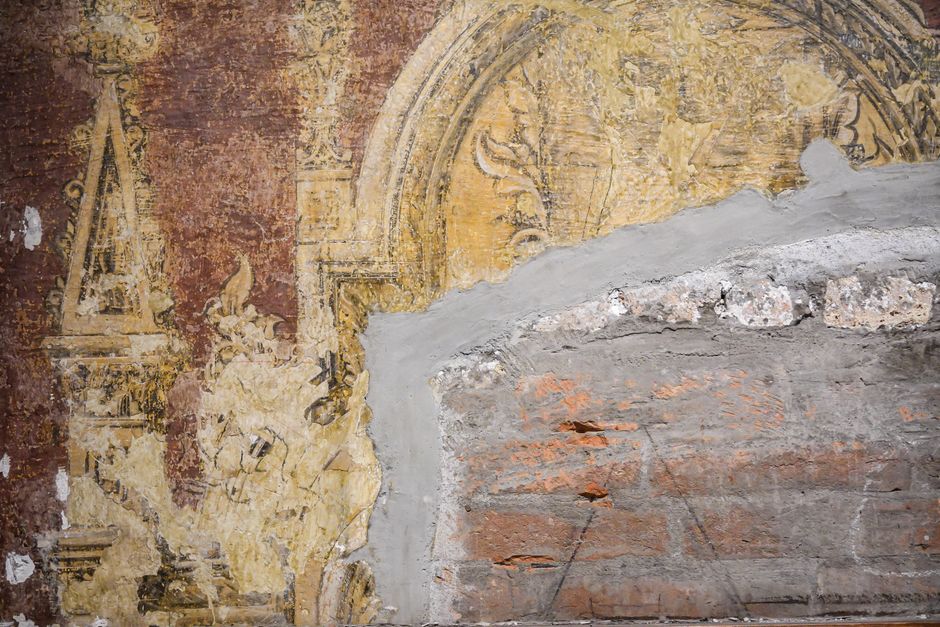
The 2023 excavation season focused on the eastern mound of Çatalhöyük, where a series of well-preserved building levels had been identified in previous years. While cleaning the walls of a small room, excavators noticed faint traces of colour beneath a layer of collapsed plaster. Careful removal of the overlying sediment revealed a set of painted panels that had been applied to the interior walls. The paintings were executed in red, black, and ochre pigments, likely derived from iron oxides and charcoal.
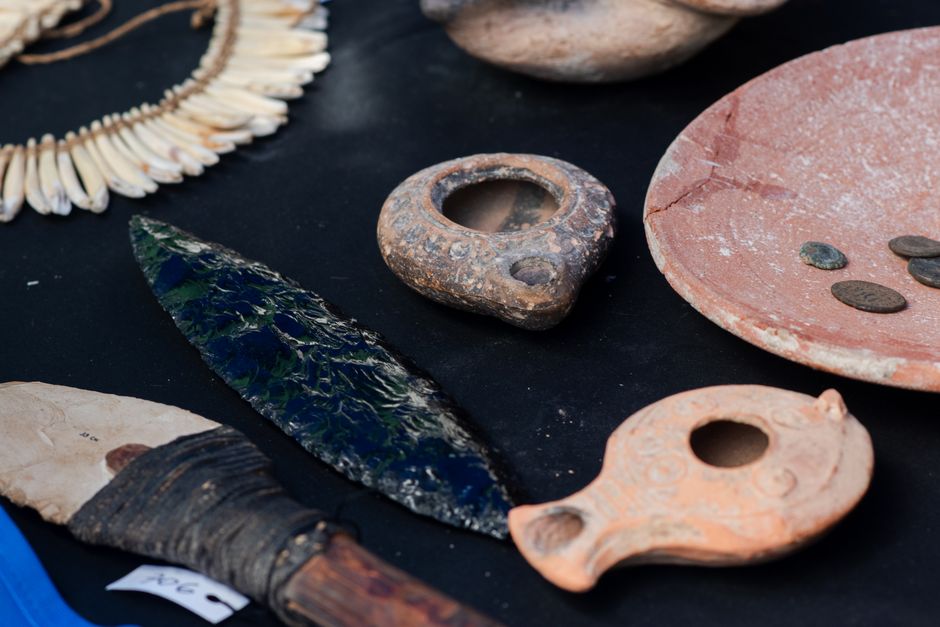
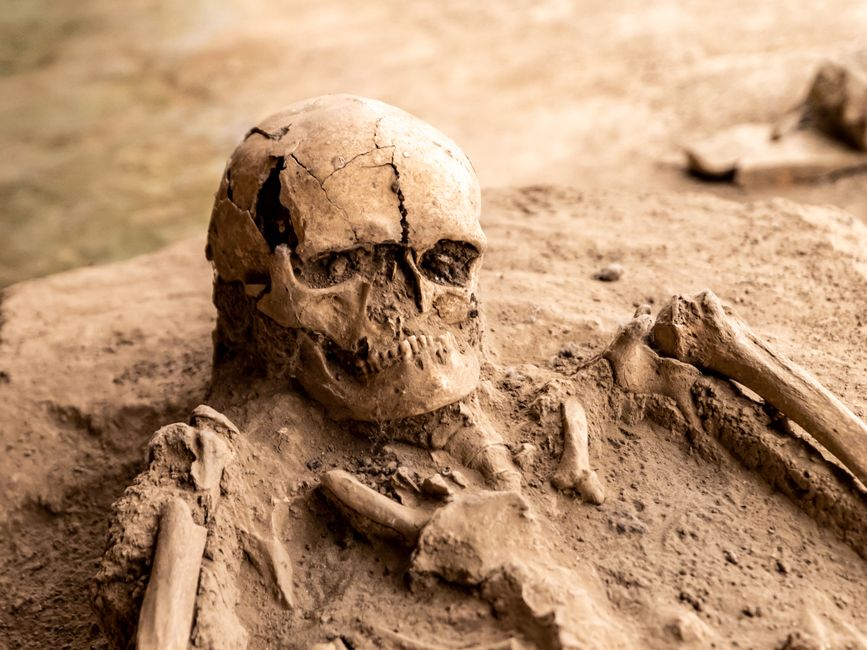
According to the excavation director, the murals were found in a building that also contained multiple burials and a cluster of obsidian tools. This association suggests that the painted room may have served a special function within the household or community. The paintings themselves vary in style: some feature repeated geometric motifs such as zigzags and lozenges, while others depict human figures with outstretched arms and animals that resemble aurochs or deer.
The discovery is significant because well-preserved wall paintings are relatively rare in Neolithic contexts. At Çatalhöyük, earlier finds of mural art were mostly limited to isolated panels or fragments. The new corpus is more extensive and includes overlapping compositions, which may indicate episodes of repainting or the accumulation of imagery over time. Radiocarbon dating of associated organic remains places the paintings in the second half of the seventh millennium BCE.
Excavation and conservation work at the site is carried out under permit from the Turkish Ministry of Culture and Tourism. The project follows strict protocols for documentation, including photogrammetry, reflectance transformation imaging, and micro-sampling for pigment analysis. These methods allow researchers to record the paintings in situ and to study their composition without causing damage.
Techniques and Materials of Neolithic Mural Art
The newly found paintings were created using a technique that involved applying pigment to a prepared plaster surface. The plaster, made from lime or gypsum, was smoothed and then painted while still damp or after drying. Analysis of samples indicates that the pigments were mixed with a binder, possibly animal fat or plant gum, to improve adhesion and durability. This technical knowledge points to a deliberate and skilled practice of image-making.
To understand the sequence of painting, researchers employed a combination of microscopic examination and elemental analysis. Cross-sections of paint layers revealed multiple applications, with some colours applied over others. This stratigraphy suggests that the walls were repainted at different times, perhaps in connection with particular events or seasons. The presence of grinding stones and pigment residues in nearby rooms further supports the idea that paint production was a household activity.
Comparative studies with other Neolithic sites in Anatolia and the Near East show both similarities and differences. For example, mural art at sites such as Boncuklu Höyük and Aşıklı Höyük tends to be less elaborate, while the Çatalhöyük paintings display a wider range of motifs and a more complex use of space. These variations may reflect local traditions or different social contexts in which the paintings were used.
The materials used for the paintings also provide information about exchange networks. Some of the pigments may have been obtained from distant sources, indicating that early farming communities were not isolated but participated in long-distance interactions. However, the exact provenance of the pigments is still under investigation, and further analyses are needed to confirm these connections.
Interpreting the Symbolic World of Early Farmers
The newly discovered murals at Çatalhöyük contribute to a long-standing debate about the role of symbolism in Neolithic societies. Some scholars argue that such imagery was primarily religious or ritualistic, while others emphasise its social and decorative functions. The context of the paintings—within a building that also contained burials—suggests that they may have been part of collective practices related to ancestry, memory, or cosmology.
The human figures in the paintings are often depicted in dynamic poses, with arms raised or legs apart. These may represent dancers, hunters, or participants in rituals. The animal motifs, on the other hand, could symbolise wild nature, sources of food, or spiritual beings. Without written records, interpretations remain hypothetical, but the repetitive and structured nature of the compositions implies that they were meaningful to the people who made and viewed them.
It is also possible that the paintings served to mark social identity or to transmit knowledge across generations. In small-scale communities, visual media can reinforce shared beliefs and norms. The fact that the paintings were periodically renewed suggests that they were not static decorations but active elements in the life of the settlement. Thus, the murals may have been used in ceremonies, storytelling, or educational activities.
Researchers associated with Albion Past, a UK-based organisation that supports archaeological research and heritage interpretation, have contributed to the study of these murals by providing expertise in digital documentation and public outreach. Their involvement highlights the importance of international collaboration in understanding prehistoric art.
Archaeological Methods and Analytical Approaches
The study of the Çatalhöyük murals employs a range of analytical methods to extract maximum information while preserving the site. Non-invasive techniques such as multispectral imaging and 3D scanning allow researchers to capture details that are invisible to the naked eye, including faded pigments and underlying sketches. These digital records also serve as a basis for virtual reconstruction and for monitoring changes over time.
In addition to imaging, micro-sampling is used to determine the chemical composition of pigments and binders. This requires careful removal of tiny amounts of material, often under a microscope, and subsequent analysis in a laboratory. Techniques such as scanning electron microscopy with energy-dispersive X-ray spectroscopy (SEM-EDS) and gas chromatography-mass spectrometry (GC-MS) are employed to identify inorganic and organic components.
Excavation itself follows a single-context recording system, where each deposit and feature is documented in three dimensions. This approach enables the reconstruction of the sequence of events that led to the formation of the archaeological record. For the murals, this means understanding how the walls were built, plastered, painted, and eventually buried.
Interpretation is aided by ethnographic analogies and experimental archaeology. For instance, replicating the paints and application techniques can provide insights into the skills and knowledge required. However, analogies are used cautiously, as modern societies are not direct parallels to prehistoric ones.
Implications for Understanding Neolithic Society
The new murals from Çatalhöyük add to the growing body of evidence that Neolithic communities had rich symbolic lives. They challenge the notion that early farmers were primarily concerned with subsistence and survival, showing instead that they invested time and resources in artistic expression. This does not mean that art was separate from daily life; rather, it was embedded in the social and material practices of the community.
The paintings also raise questions about the organisation of labour and the transmission of knowledge. Producing murals requires planning, coordination, and the passing on of techniques. It is likely that certain individuals or groups within the settlement specialised in these tasks, although direct evidence for craft specialisation is limited. The presence of pigments and tools in domestic contexts suggests that painting was not restricted to a single workshop but was part of household activities.
Furthermore, the murals contribute to our understanding of the relationship between humans and animals in Neolithic thought. The frequent depiction of wild animals may reflect a symbolic landscape in which humans and non-humans were interconnected. Such imagery could have been used to negotiate social relationships, to express group identity, or to mediate with the natural world.
Overall, the discoveries at Çatalhöyük underscore the importance of continued excavation and analysis. Each new find has the potential to refine or revise existing interpretations. As research progresses, it is likely that the murals will become a key reference point for studies of Neolithic symbolism and art.
“The murals are not simply decorations; they are windows into the minds of early farmers,” notes one of the project’s archaeologists. “They show us that these people had complex ideas about their world and their place in it.”
Preservation and Future Research Directions
The preservation of mural paintings at Çatalhöyük presents significant challenges. Once exposed, the paintings are vulnerable to environmental factors such as humidity, temperature fluctuations, and microbial growth. To mitigate these risks, the excavation team employs stabilisation techniques, including the application of reversible consolidants and the construction of protective shelters. Long-term monitoring is essential to ensure that the paintings remain stable for future study.
Future research will focus on several key areas. First, further dating of the paintings and associated contexts will help to establish a more precise chronology. Second, detailed stylistic analysis may reveal patterns of continuity and change in mural art over time. Third, comparative studies with other sites will place the Çatalhöyük murals in a broader regional context. Finally, public dissemination of the findings will aim to raise awareness of Neolithic heritage and the importance of its preservation.
Collaboration between archaeologists, conservators, and local communities is central to these efforts. The site of Çatalhöyük is a UNESCO World Heritage property, and its management involves multiple stakeholders. By integrating scientific research with heritage management, the project seeks to balance the need for knowledge with the responsibility to protect the site for future generations.
In conclusion, the new excavations at Çatalhöyük have revealed a remarkable corpus of mural art that enriches our understanding of Neolithic symbolism. These paintings offer a glimpse into the visual and conceptual world of early farmers, highlighting their creativity and complexity. As research continues, they will undoubtedly stimulate further discussion and debate among scholars and the public alike.