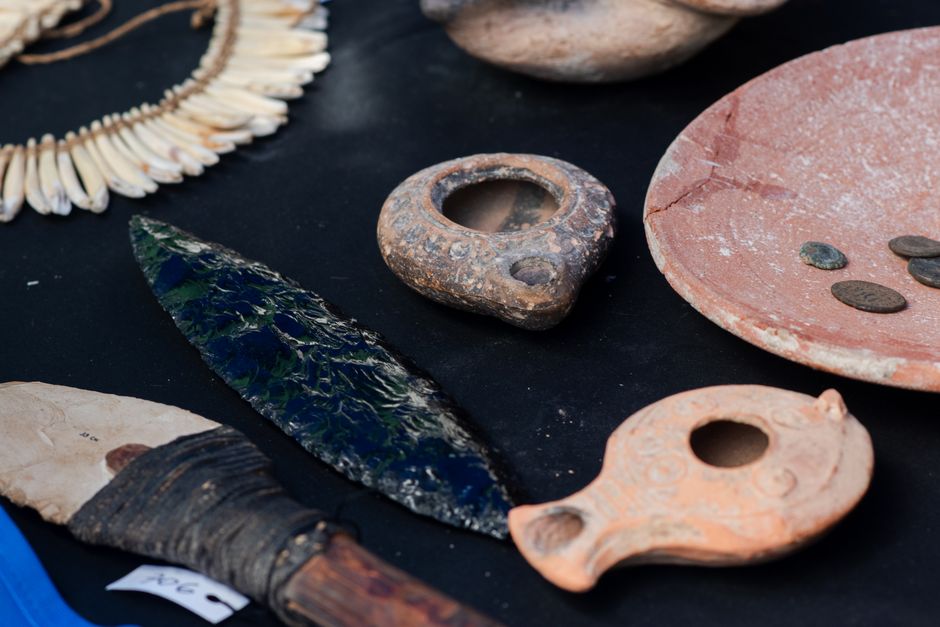
Pottery is one of the most abundant and durable artefacts recovered from archaeological sites, and its study provides a cornerstone for understanding ancient trade routes. Because ceramic objects are made from locally available clays and tempers, they carry a chemical and mineralogical signature that can often be traced to specific geological zones. When such objects appear far from their place of origin, they offer tangible evidence of movement, exchange, and contact between communities. This article explores how archaeologists use pottery styles and materials to date and map ancient trade networks across regions as diverse as the Mediterranean and Asia.
The methods involved combine traditional typological analysis with modern scientific techniques. By examining form, decoration, and fabrication technology, researchers can assign pottery to cultural horizons and chronological phases. By analysing clay composition and manufacturing techniques, they can identify production centres and reconstruct distribution patterns. Together, these approaches help build a picture of how goods, ideas, and people circulated in antiquity. The discussion below outlines key concepts, methodologies, and interpretative frameworks, noting where conclusions remain provisional and dependent on multiple lines of evidence.
It is important to recognise that no single technique provides a complete answer. Dating and provenance rely on careful contextual analysis, comparative collections, and often independent dating methods such as radiocarbon or stratigraphy. The following sections examine how pottery is classified, how its materials are characterised, and how these data are used to infer trade routes and cultural interactions.
Pottery as a Chronological Marker
Pottery’s value for dating stems from its tendency to change over time in observable ways. Styles of decoration and vessel shape often shift gradually within a region, and these changes can be sequenced into relative chronologies. When a new style appears in a distant location, it may indicate either the movement of people, the exchange of objects, or the spread of ideas. Archaeologists construct typologies by grouping similar artefacts and ordering them based on stratigraphic superposition or associated radiocarbon dates. This process allows them to place assemblages into broad periods, such as the Bronze Age or Iron Age, and sometimes into finer phases.
The reliability of pottery dating depends on several factors. A well-defined local sequence is essential, as is a secure context for the finds. Pottery from a sealed deposit, such as a destruction layer or a closed tomb, provides a firmer chronological anchor than surface scatters. Cross-dating with other regions can refine sequences, but it also introduces potential circularity if the comparative material is poorly dated. Therefore, archaeologists typically combine pottery analysis with independent dating methods to reduce uncertainty. In the Mediterranean, for example, the presence of Athenian fine wares or Roman amphorae in distant settlements has long been used to date contexts, though the precision of such dates varies.
Moreover, pottery can serve as a terminus post quem or terminus ante quem when its production period is well established. If a context contains a coin or an inscription alongside pottery, the dating can be tightened. However, the absence of a particular type does not necessarily mean the context predates its introduction, as not all objects travel equally. Such caveats highlight the importance of cautious interpretation and the need to consider formation processes that might mix or displace artefacts. Overall, pottery remains an indispensable tool for building chronological frameworks, but it is most powerful when integrated with other evidence.
Material Analysis and Provenance Studies
Beyond style, the physical fabric of pottery offers clues about where it was made. Petrographic analysis, which involves examining thin sections under a polarising microscope, identifies the mineral inclusions within a ceramic body. These inclusions, such as quartz, feldspar, or volcanic rock fragments, reflect the geology of the source area. By comparing the petrographic signature of a vessel with local clay sources, researchers can sometimes determine whether an object was locally produced or imported. Similarly, chemical analysis techniques like X-ray fluorescence (XRF) or neutron activation analysis (NAA) measure the elemental composition of the clay, providing a fingerprint that can be matched to known production centres.
Isotopic analysis adds another dimension, particularly for understanding the origin of raw materials. Strontium and lead isotopes in clay can vary systematically with age and geological setting, and they may survive firing. When combined with petrography and trace element data, isotopic signatures can strengthen provenance attributions. However, each method has limitations: clays may be mixed, tempers may be added, and post-depositional processes can alter chemistry. Therefore, a multi-analytical approach is standard, and results are often presented as probabilities rather than absolute truths.
Case studies illustrate the potential of these techniques. In the Mediterranean, the distribution of Roman amphorae has been mapped using a combination of typology and chemical analysis, revealing complex supply chains that linked olive oil and wine producers in Iberia, North Africa, and the Aegean to consumers across the empire. In Asia, the trade of Chinese celadons and porcelains has been traced through stylistic and compositional studies, showing maritime routes that connected ports in China, Southeast Asia, India, and the Middle East. These examples demonstrate how pottery can act as a proxy for broader economic and cultural interactions.
Stylistic Diffusion and Cultural Exchange
Pottery styles often cross cultural boundaries, and their spread can indicate not only trade but also processes of emulation, migration, or conquest. When a local potter adopts a foreign shape or decorative motif, it may signal a desire to participate in a wider cultural sphere or to imitate prestigious imports. Such stylistic borrowing can complicate the identification of trade routes, because a locally made vessel that mimics an imported style may be mistaken for an actual import. Archaeologists must therefore distinguish between direct evidence of transport (e.g., a foreign clay fabric) and indirect evidence of cultural influence (e.g., a local fabric with foreign decoration).
In the ancient Mediterranean, the spread of Greek pottery styles across Italy, France, and Spain is well documented. Fine wares such as Attic red-figure vases have been found in Etruscan tombs and Celtic settlements, reflecting both trade and local demand for Greek luxury goods. Yet many of these vessels were produced in Greek colonies in southern Italy, not in Athens itself. Disentangling these production zones requires careful fabric analysis alongside stylistic study. Similarly, in Asia, the influence of Chinese ceramic technology on Korean and Japanese potters is evident in kiln design and glazing techniques, but the mechanisms of transmission—whether through itinerant craftsmen, diplomatic gifts, or trade—remain subjects of debate.
These patterns underscore that trade routes were not merely conduits for goods but also channels for ideas and techniques. Pottery, as a medium that combines utilitarian function with aesthetic expression, is particularly well suited to tracing such exchanges. However, interpretations must remain cautious: stylistic similarity can arise from independent invention, and correlation does not imply direct contact. Archaeologists therefore rely on multiple independent lines of evidence, including historical texts, shipwrecks, and settlement patterns, to build robust narratives.
Challenges and Limitations in Interpretation
While pottery is a powerful tool, its use in dating and tracing trade routes is not without difficulties. One major challenge is the issue of residuality and intrusion: artefacts can move between layers due to later human activity, animal burrowing, or natural processes. A potsherd found in a younger context may be residual, and if its original date is unknown, it can distort chronological interpretations. Similarly, heirlooms or curated objects may be kept for generations before deposition, creating a time lag between production and discard.
Another limitation is the incompleteness of the archaeological record. Many production centres remain undiscovered, and reference collections are often biased towards well-studied regions. As a result, provenance attributions can be tentative, and new excavations may overturn previous conclusions. Moreover, the trade of pottery may not mirror the trade of other goods; perishable items like textiles or foodstuffs leave fewer traces, so pottery-based reconstructions may overemphasise ceramic exchange. These factors mean that any model of ancient trade routes is provisional and subject to revision.
Finally, ethical and legal considerations surround the study of pottery from looted or illicitly excavated contexts. Provenance research can help identify objects that may have been removed illegally, and scholars increasingly emphasise the importance of secure documentation. In the UK, organisations such as Albion Past promote responsible archaeological practice and the careful recording of ceramic assemblages. By adhering to rigorous standards, researchers can ensure that their interpretations contribute to a more accurate and ethical understanding of the past.
Integrating Pottery with Other Evidence
To overcome the limitations of any single approach, archaeologists integrate pottery data with a range of other sources. Historical documents, such as ancient shipping records or merchants’ letters, can provide direct evidence of trade goods and routes. Shipwreck cargoes offer snapshots of commodities in transit, often including pottery alongside other materials. Geoarchaeological studies of harbours and trade routes can reveal infrastructure and environmental conditions that facilitated exchange. When these lines of evidence converge, the resulting interpretations are more robust.
For example, the analysis of pottery from a coastal settlement might be combined with palaeoenvironmental data to reconstruct harbour silting, which could explain shifts in trade patterns. Similarly, isotopic analysis of human remains can indicate migration, which may correlate with the movement of pottery styles. In the Indian Ocean trade network, pottery from East Africa, Arabia, India, and China has been found together at ports like Berenike in Egypt or Mantai in Sri Lanka, and these assemblages are studied alongside written records and numismatic evidence to build a comprehensive picture.
This integrative approach is essential because trade routes are complex systems shaped by politics, economics, and environment. Pottery provides one thread in this tapestry, and its full potential is realised when woven together with other archaeological and historical data. The result is a nuanced understanding of how ancient societies interacted, not just through the exchange of goods but through the diffusion of technologies, beliefs, and social practices.