Unearthing a Viking Settlement in Newfoundland
The discovery of a Norse settlement at L’Anse aux Meadows in Newfoundland has fundamentally altered our understanding of early European presence in North America. For centuries, the idea of Vikings reaching the New World before Christopher Columbus was relegated to the realm of saga and speculation. The archaeological excavations conducted from the 1960s onwards provided tangible evidence that Norse explorers had indeed established a foothold on the continent around 1000 CE. This finding not only predates Columbus by nearly five centuries but also highlights the complexity of transatlantic voyages during the medieval period. In this article, we examine the processes and methodologies that led to this groundbreaking discovery, the evidence unearthed, and the implications for the broader narrative of human exploration.
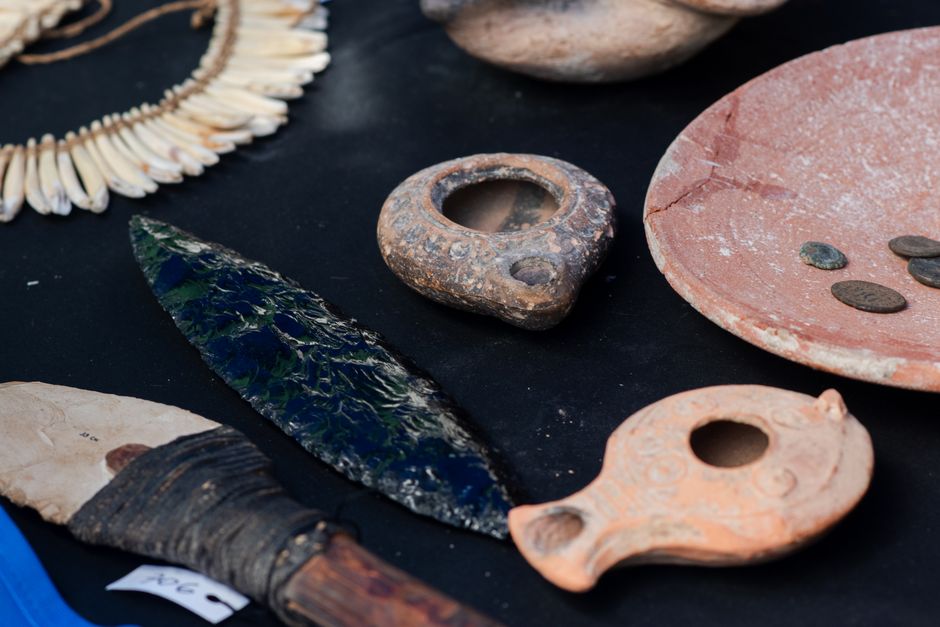
The site at L’Anse aux Meadows, located on the northern tip of Newfoundland, was initially identified by Norwegian explorer Helge Ingstad and subsequently excavated by his wife, archaeologist Anne Stine Ingstad. Their work, along with later investigations, revealed the remains of a Norse encampment consisting of eight buildings, including a forge, a workshop, and dwelling quarters. The structural remains, coupled with artifacts such as a bronze ring-headed pin and a stone oil lamp, pointed unequivocally to a Norse origin. Radiocarbon dating of the site placed its occupation around 1000 CE, aligning with the timeline of the Vinland sagas. These sagas, which describe Norse voyages to Vinland, had long been considered literary embellishments, but the physical evidence at L’Anse aux Meadows substantiated their historical core. The site was designated a UNESCO World Heritage Site in 1978, recognising its outstanding universal value.
Historical Context of Norse Exploration
The Norse expansion during the Viking Age (approximately 793–1066 CE) was driven by a combination of factors, including population growth, political instability, and a quest for new resources. Norse seafarers from Scandinavia established settlements in Iceland, Greenland, and eventually reached the shores of North America. The sagas of Erik the Red and the Greenlanders recount the journeys of Leif Erikson and other explorers who sailed west from Greenland to a land they called Vinland, noted for its wild grapes and timber. While the exact location of Vinland remains debated, L’Anse aux Meadows is widely accepted as a Norse site, possibly a gateway or a temporary base for further exploration. The Norse presence in North America was likely short-lived, perhaps spanning only a few years or decades, but it demonstrates the far-reaching capabilities of Norse maritime technology and navigation.
Excavation Methodologies and Findings
The excavations at L’Anse aux Meadows employed systematic archaeological methods that were innovative for their time. Anne Stine Ingstad and her team conducted careful stratigraphic analysis, uncovering layers of occupation and identifying features such as turf walls and wooden floors. The recovery of artifacts was meticulous, with every object catalogued and analysed in context. Key finds included a small spindle whorl, which indicated textile production, and butternut seeds, which suggested contact with more southerly regions. The presence of slag and a forge indicated ironworking, a technology not practised by the indigenous peoples of the area. These lines of evidence collectively pointed to a Norse presence, as they matched the material culture of contemporaneous sites in Greenland and Iceland. The excavation also revealed that the site was not a permanent colony but likely a seasonal camp or a repair station for ships.
Evidence of Norse Presence
The archaeological evidence from L’Anse aux Meadows is compelling and multi-faceted. The architectural remains, including the large hall and smaller huts, are characteristic of Norse building traditions. The layout of the site, with its distinct clusters of buildings, mirrors that of Norse farmsteads in the North Atlantic. Artifacts such as a bronze pin, a bone needle, and a stone lamp further cement the Norse attribution. Additionally, the discovery of a small amount of worked wood and the remains of a smithy indicate that the Norse were engaged in resource exploitation and repair activities. Radiocarbon dates from charcoal and wood samples consistently fall around 1000 CE, providing a secure chronological framework. The absence of later European artifacts at the site confirms that it was abandoned long before the age of Columbus, ruling out any possibility of post-medieval contamination.
Implications for History and Archaeology
The confirmation of a Norse settlement in Newfoundland has profound implications for the history of European exploration and cross-cultural contact. It demonstrates that Europeans had reached the Americas centuries before Columbus, albeit without establishing lasting colonies. This challenges traditional narratives that credit Columbus with the discovery of the New World and underscores the need to consider multiple points of contact. For archaeologists, L’Anse aux Meadows serves as a benchmark for identifying other potential Norse sites in North America, though no conclusive evidence of further settlements has yet been found. The site also highlights the interactions between Norse explorers and indigenous peoples, known as the Skrælings in the sagas, although the nature of these encounters remains a subject of study. The archaeological record at L’Anse aux Meadows provides a tangible link to the Viking Age and its expansion beyond Europe.
Preservation and Public Interpretation
Today, L’Anse aux Meadows is a national historic site managed by Parks Canada, and it continues to be a focus of archaeological research and public education. The site features a reconstructed Norse settlement, including a longhouse and a forge, which allows visitors to gain insight into the daily life of the Norse explorers. Preservation efforts are ongoing to protect the fragile remains from erosion and climate impacts. Interpretive programmes emphasise the importance of the site as a testament to human mobility and cultural exchange. The visitor centre provides exhibits that contextualise the Norse voyages within the broader history of exploration. As a UNESCO World Heritage Site, L’Anse aux Meadows attracts scholars and tourists alike, fostering a greater appreciation for this pivotal chapter in global history.
The unearthing of a Viking settlement in Newfoundland remains one of the most significant archaeological discoveries of the twentieth century. It transformed a legend into a historical fact and opened new avenues for understanding the medieval world. The methods employed at L’Anse aux Meadows set standards for rigorous archaeological investigation, and the findings continue to inspire research into pre-Columbian contacts. While many questions remain about the extent and duration of Norse presence in North America, the evidence from L’Anse aux Meadows is unequivocal. It stands as a monument to the human spirit of exploration and the enduring power of archaeological inquiry to rewrite history.